Introduction
The web development industry changes rapidly. New frameworks, tools, AI coding assistants, and development practices appear every year.
This raises an important question for students and aspiring developers:
Is the MERN Stack still worth learning in 2026?
The answer is yes — but with an important condition.
Learning only MongoDB, Express.js, React, and Node.js is no longer enough to become a strong modern developer. The MERN Stack should be treated as a foundation for full-stack development and combined with modern skills such as TypeScript, Next.js, Git, cloud deployment, testing, databases, and AI-assisted development.
What Is the MERN Stack?
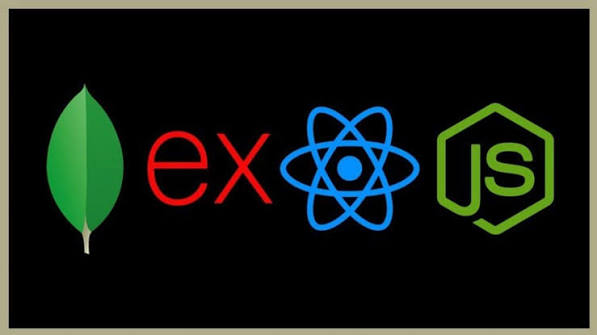
MERN stands for:
M — MongoDB E — Express.js R — React N — Node.js
Together, these technologies allow developers to build complete web applications using JavaScript across both the frontend and backend.
MongoDB
MongoDB is a NoSQL database that stores data in flexible, document-based structures.
It is commonly used for applications where developers want a flexible data model and easy integration with JavaScript-based applications.
Examples include:
User accounts Product information Blog posts Course data Student records Application content Express.js
Express.js is a lightweight web framework for Node.js.
It makes it easier to create backend applications and APIs.
Developers can use Express.js to build:
REST APIs Authentication systems Middleware Server-side routes Database integrations React
React is a JavaScript library for building user interfaces.
It allows developers to create reusable components and interactive web applications.
React is widely used for:
Dashboards E-commerce applications Admin panels Learning platforms Social applications Business websites Node.js
Node.js allows JavaScript to run outside the browser.
With Node.js, developers can create backend applications, APIs, command-line tools, real-time applications, and server-side services.
Why Is MERN Still Relevant in 2026?
One of the biggest advantages of MERN is that developers can use JavaScript throughout the application.
A typical MERN developer can work with:
Frontend → React
Backend → Node.js + Express.js
Database → MongoDB
This reduces the number of programming languages beginners need to learn when starting full-stack web development.
The MERN Ecosystem Has Evolved
Although the core MERN technologies remain useful, modern development has evolved.
Developers now commonly work with additional technologies such as:
TypeScript Next.js Tailwind CSS PostgreSQL Docker Cloud platforms GitHub Testing frameworks AI development tools
Therefore, learning MERN should not mean stopping after learning four technologies.
Instead, MERN should be the starting point for learning modern full-stack development.
MERN + TypeScript
TypeScript has become increasingly important in modern web development.
It adds static typing to JavaScript, helping developers catch certain errors earlier and making large codebases easier to maintain.
A modern MERN developer should consider learning:
JavaScript → TypeScript → React → Full-Stack Development
TypeScript is particularly useful when working on large applications and collaborative development teams.
MERN + Next.js
Next.js builds on the React ecosystem and provides features for modern web applications.
It can provide capabilities such as:
Server-side rendering Static generation Routing Server components API/backend capabilities Image optimization Performance improvements
For developers who already understand React, learning Next.js can be a natural next step.
What About AI?
AI is changing the way developers build software.
AI coding assistants can help developers:
Generate code Explain code Debug errors Create test cases Generate documentation Refactor code Build prototypes
However, AI does not eliminate the need to understand programming fundamentals.
A developer still needs to understand the code being generated and verify that it is correct, secure, and maintainable.
Skills a MERN Developer Should Learn in 2026
If you want to become a job-ready MERN developer, don't stop at the basic MERN technologies.
Build your skills in the following areas:
- HTML and CSS
Understand semantic HTML, responsive design, Flexbox, Grid, and modern CSS.
- JavaScript
Learn JavaScript deeply, including:
- Variables
- Scope
- Hoisting
- Functions
- Closures
- Objects
- Arrays
- Promises
- Async/await
- DOM
- Events
- Modules
- Error handling
- React
Learn:
- Components
- Props
- State
- Hooks
- Context
- Forms
- API integration
- Routing
- Performance optimization
- Node.js and Express.js
Understand:
- REST APIs
- Middleware
- Authentication
- Authorization
- Error handling
- File uploads
- API security
- Databases
Learn MongoDB, but also understand relational databases such as PostgreSQL or MySQL.
Knowing when to use SQL versus NoSQL is an important professional skill.
- TypeScript
Learn TypeScript and start using it in real-world projects.
- Git and GitHub
Developers need to know how to:
- Create repositories
- Commit changes
- Create branches
- Merge changes
- Resolve conflicts
- Work with pull requests
- Deployment
Learn how to deploy applications and understand:
- Environment variables
- Production builds
- Domains
- Hosting
- CI/CD basics
- Cloud platforms
- Testing
Learn the basics of unit testing, integration testing, and end-to-end testing.
- AI-Assisted Development
Learn how to use AI tools effectively while still understanding the code you build.
Is MERN Good for Beginners?
Yes.
MERN can be a good starting point for beginners because JavaScript can be used across the frontend and backend.
However, beginners should avoid trying to learn every framework and tool at once.
A better learning path is:
HTML → CSS → JavaScript → React → Node.js → Express.js → MongoDB → Git/GitHub → TypeScript → Next.js → Deployment
Once the fundamentals are strong, developers can add AI development and other advanced technologies.
MERN vs Other Full-Stack Technologies
MERN is not the only way to become a full-stack developer.
Other popular combinations include:
React + Node.js + PostgreSQL Next.js + PostgreSQL Angular + .NET React + Java Spring Boot Vue + Node.js Python + Django + React
The important thing is not simply choosing the "best" stack.
The goal is to understand programming fundamentals and learn how to build reliable real-world applications.
How to Become Job-Ready With MERN
Learning tutorials alone is not enough.
Build projects that demonstrate your ability to solve real problems.
Good project ideas include:
E-commerce platform Learning management system Job portal CRM application Blogging platform Expense tracker Appointment booking system Real-time chat application AI-powered web application
Each project should demonstrate skills such as authentication, APIs, databases, responsive UI, error handling, and deployment.
What Employers Look For
Companies generally need developers who can do more than write basic code.
A strong junior developer should be able to:
Understand requirements Build responsive interfaces Create APIs Work with databases Debug problems Use Git Deploy applications Write maintainable code Communicate clearly Learn new technologies Final Thoughts
So, is MERN still worth learning in 2026?
Yes.
MERN remains a valuable foundation for learning full-stack web development.
But the modern MERN developer needs to go beyond the traditional stack.
Combine MERN with:
TypeScript + Next.js + Git + Databases + Testing + Cloud + AI
Most importantly, focus on building real projects instead of simply collecting certificates or completing tutorials.
Technology will continue to change.
Strong programming fundamentals, problem-solving ability, and the ability to learn new tools will remain valuable.
Start Learning. Start Building.
If you're planning a career in web development, MERN can still be an excellent starting point.
Learn the fundamentals.
Build real applications.
Use modern tools.
Understand the code you write.
And keep learning.
That is how you turn a technology stack into a real software development career.